
Table of Contents
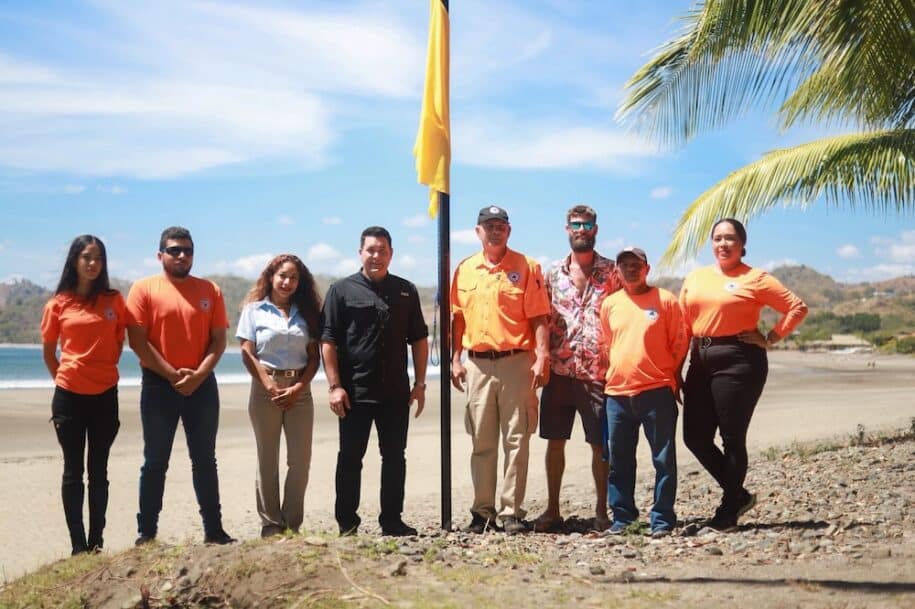
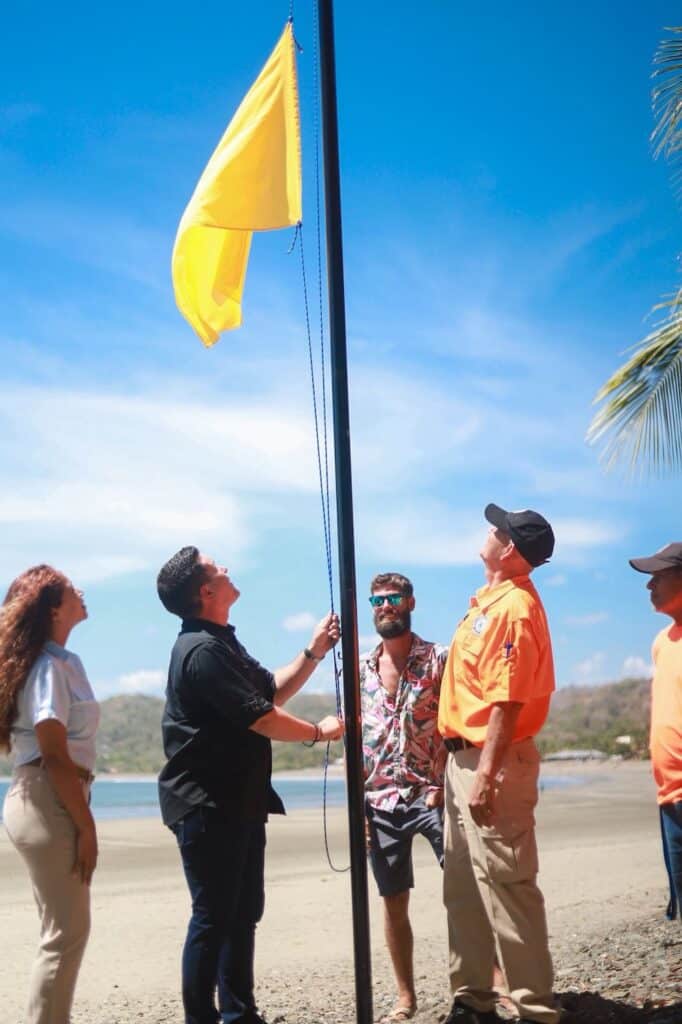
Playa Venao is one of the most popular beaches in Panama; however, it can be quite dangerous. A new system for warning flags at Playa Venao has been installed. As we know, Playa Venao is one of the best beaches for surfing in Panama. You can take a surf lesson there, which is ideal for beginners due to its sandy bottom. During your lesson, you will be accompanied by an expert instructor who will guide you through the learning process.
These warning flags at Playa Venao are intended to inform residents and visitors, both domestic and international, about sea conditions and to enhance safety at this important tourist beach. Currently, there is no lifeguard service at Playa Venao. We hope this will change in the future, given the area’s growing tourism.
What do these warning flags at Playa Venao mean?

Yellow Flag: Enter with caution.

Purple Flag: Presence of marine fauna or marine agents.

Red Flag: Not suitable for swimmers. Only for experienced surfers due to strong currents and waves.
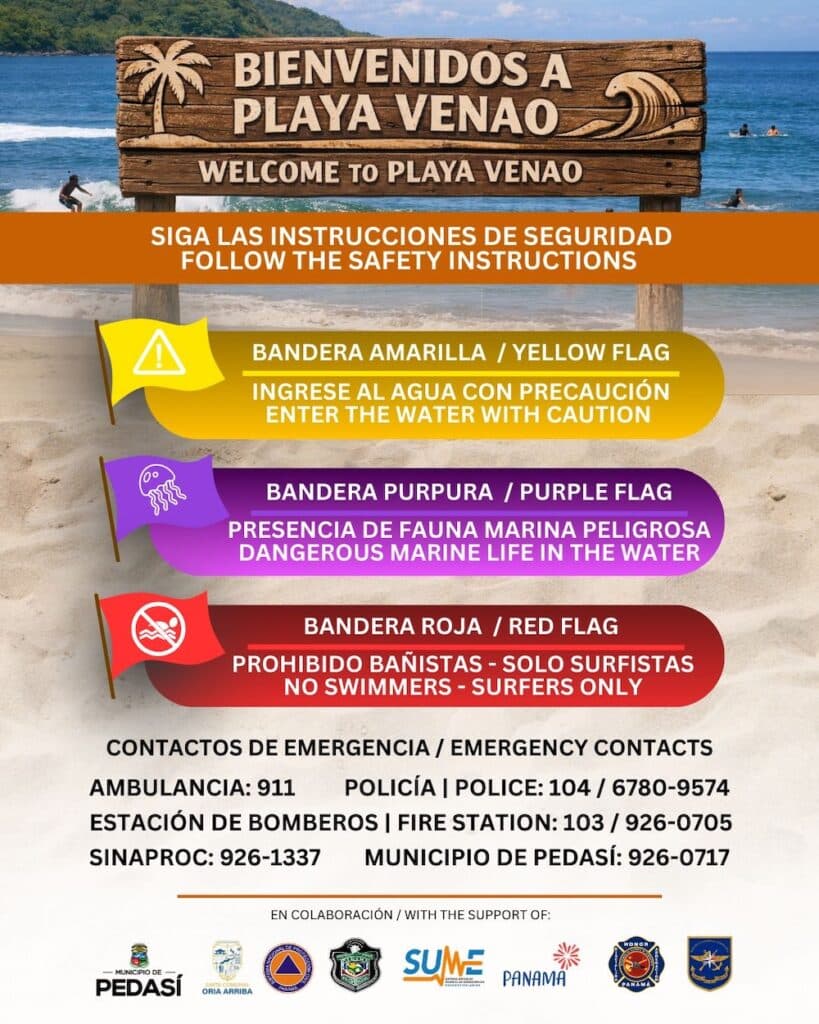
The warning flags at Playa Venao are similar to those used on other beaches worldwide. The idea is to help visitors clearly understand ocean conditions during their visit.
A yellow flag means caution is advised when entering the water, as there are moderate currents and waves. Those who cannot swim or are weak swimmers should not enter the water. A red flag, on the other hand, is a stop sign. If this flag is displayed on the beach, it means extreme caution is necessary, as the waves are dangerous.
In general, the edges of Playa Venao (which is U-shaped) are calmer than the center which is more suitable for surfing. If you’re looking for a peaceful experience, I recommend going to La Playita, the beach before Playa Venao. Another extremely relaxing option is a tour to Isla Iguana, which has characteristics more similar to the Caribbean than the Pacific.
The purple flag isn’t as common as the other two. This is mainly due to the presence of stingrays in Playa Venao. It’s advisable to shuffle your feet when entering the ocean to move any stingrays away instead of stepping on them.
A sting from this animal is very painful. Believe me, I’ve seen it. A friend of mine was stung by a stingray in Playa Venao and thought she’d been attacked by a crocodile. These animals aren’t aggressive, unlike crocodiles, but if you step on them, they’ll defend themselves and inject their venom. There was quite a bit of blood, and we had to take her to the health center in Pedasi, where, luckily, they know how to treat these wounds very well.
Participating entities
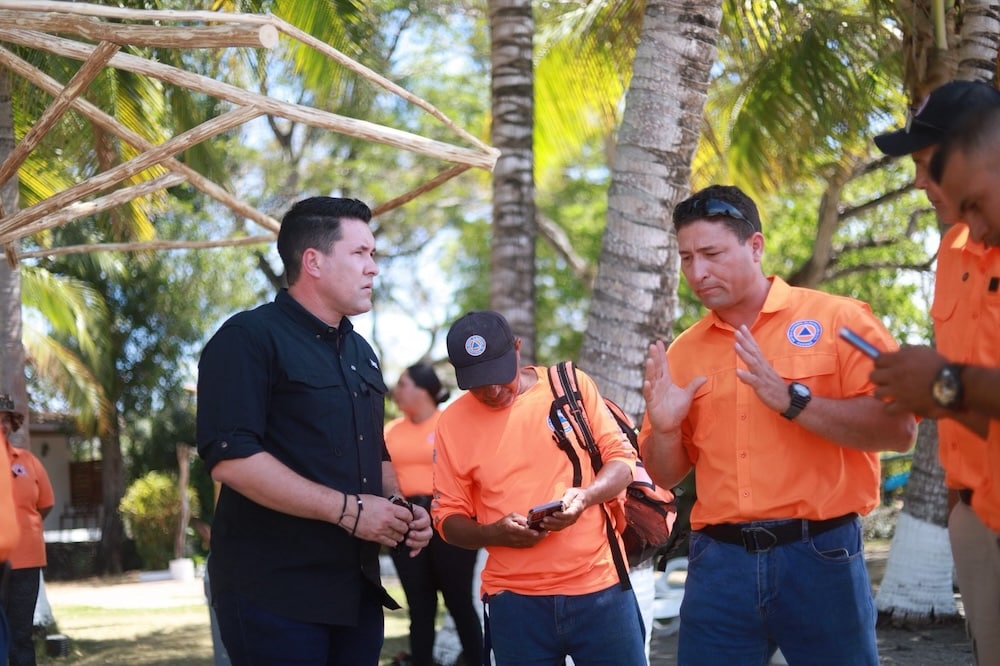
The prevention flag initiative at Playa Venao was organized by the National Civil Protection System (SINAPROC), the Panama Tourism Authority, the Municipality of Pedasi, the Oria Arriba Community Board, the Single System for Prehospital Emergency Management (Sume 911), the National Aeronaval Service (SENAN), the National Police of Panama, residents and local businesses.
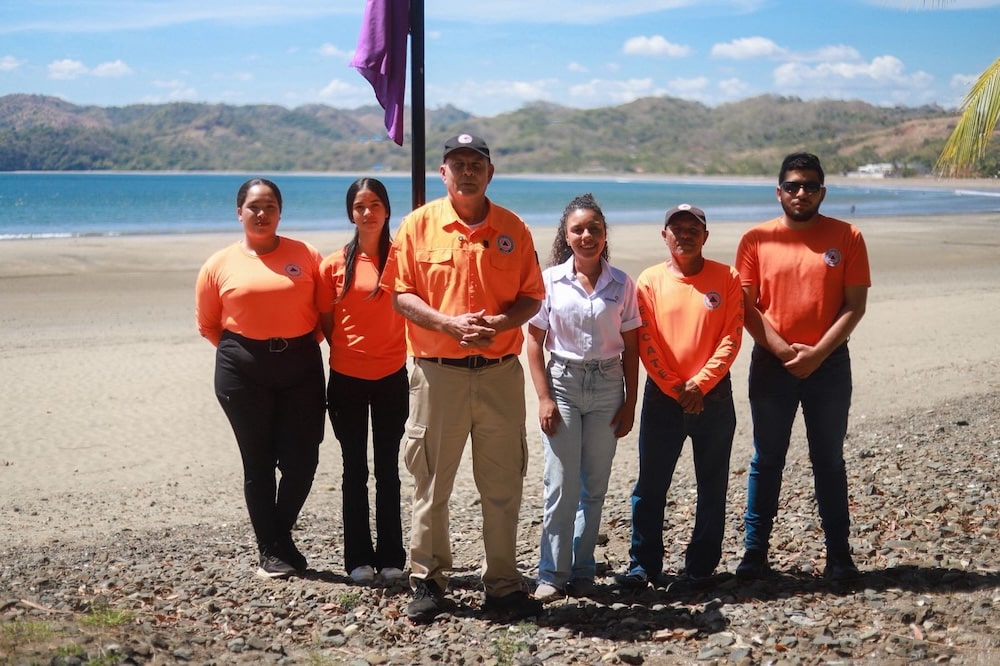
All participating entities have been holding strategic working meetings to improve visitor safety at Playa Venao. These initiatives were implemented following several tragedies. Many community members and hotel and tour operator workers are receiving first aid certifications. However, it is important that visitors exercise caution and respect the warning flags at Playa Venao.
As part of the Playa Venao prevention flag campaign, bilingual signage will be placed in businesses throughout the area to ensure everyone has clear and accessible information. Playa Venao is committed to providing a safer tourist destination for all visitors.

Leave a Reply
You must be logged in to post a comment.