
Table of Contents
Pedasi and Playa Venao are very popular destinations for spending New Year‘s in Panama. Visitors may be surprised to see effigies of the old year along the highway. These effigies are displayed from mid-December. If you travel by car from Panama City, you’ll see many effigies of the old year in the Bejuco de Chame and San Carlos area of West Panama along the Pan-American Highway.
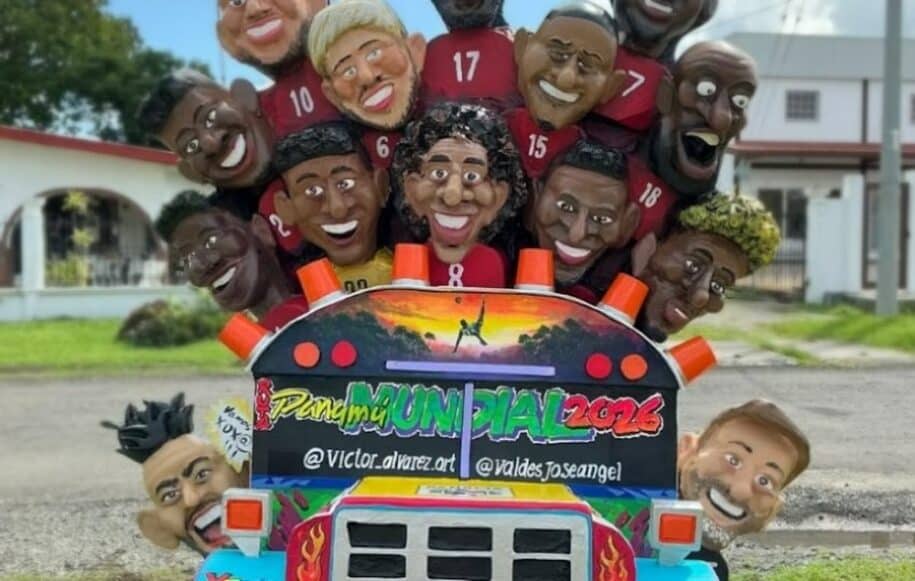
In this area, the figures are artistic expressions representing famous figures of the year, including local and international personalities and politicians. These effigies are satirical and are available for sale. Buying an effigy of the old year isn’t cheap. A very elaborate sculpture like this tribute to the Panamanian national team, with 15 faces carved on a red devil bus from the Panama World Cup 2026 costs between $4,000 and $5,000. This sculpture was made by Victor Alvarez , an artist who creates effigies of the old year every year.
They almost always make effigies of the current president and sometimes of previous presidents. This past year, there were effigies of the president of Panama, Jose Raul Mulino, the national soccer team that qualified for the 2026 World Cup, and several journalists from TVN and Hecho en Panama. There were also effigies of Trump and Maduro, who are generating a lot of discussion at the beginning of 2026.
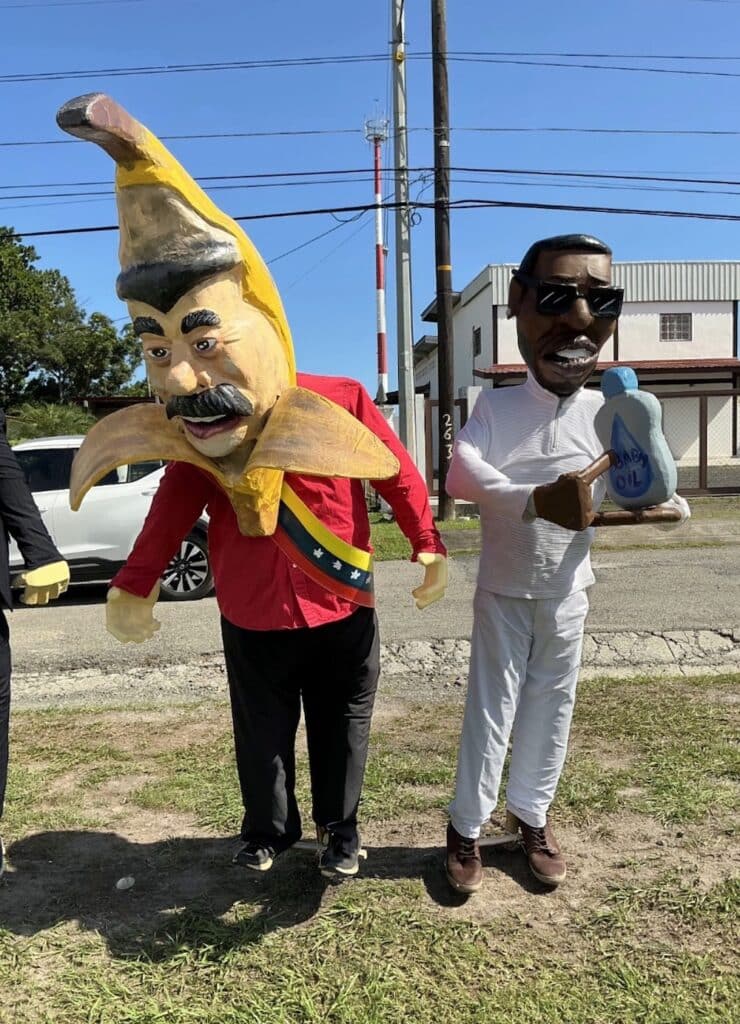
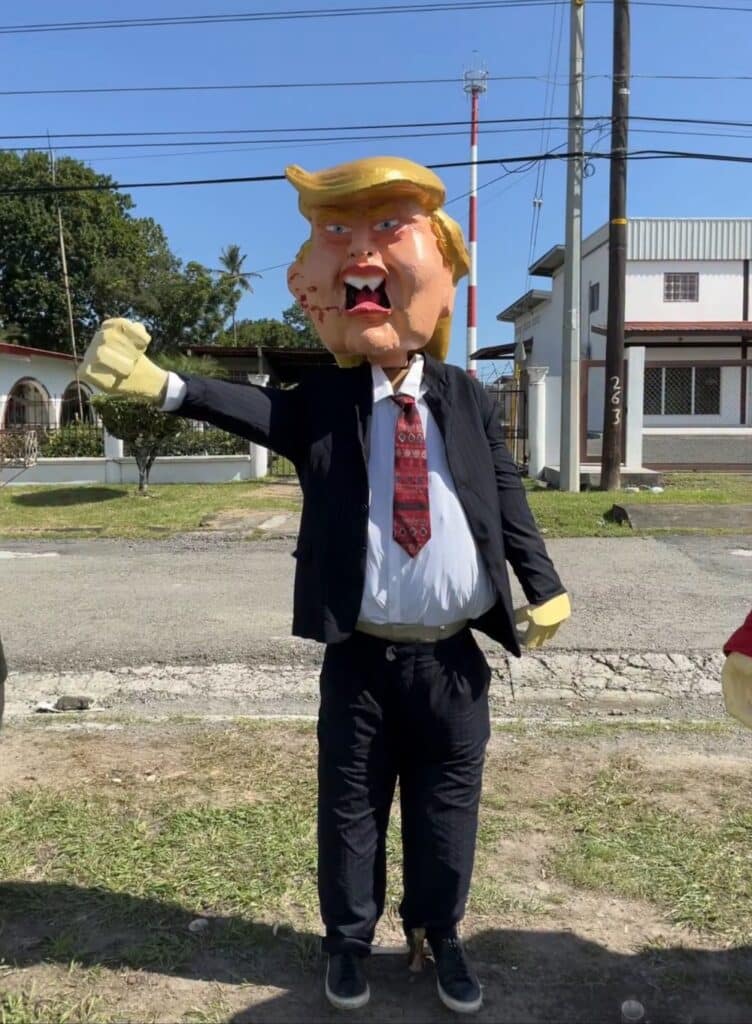
I didn’t have time to stop and take photos in the area, so this photo is from Destino Panamá.
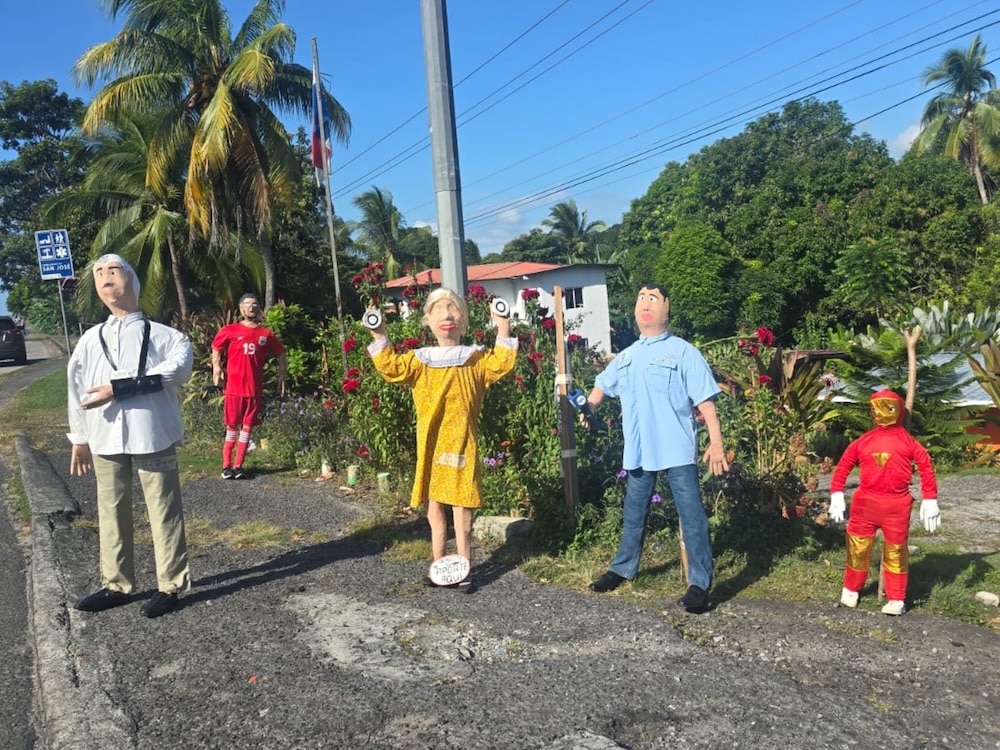
Effigies of the Old Year in Los Santos
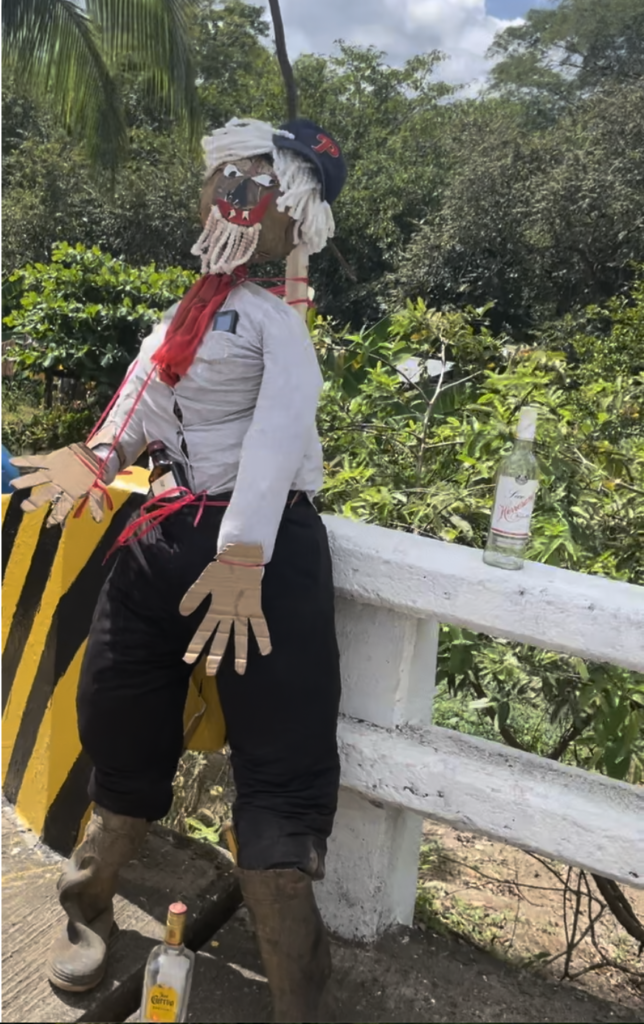
The effigies of the old year can be seen in the province of Los Santos. Some are on the main streets of Pedasi and Tonosi, while others are more hidden in towns like Los Asientos. Here, the effigies are very different: first, they are not for sale, and second, they represent everyday people.
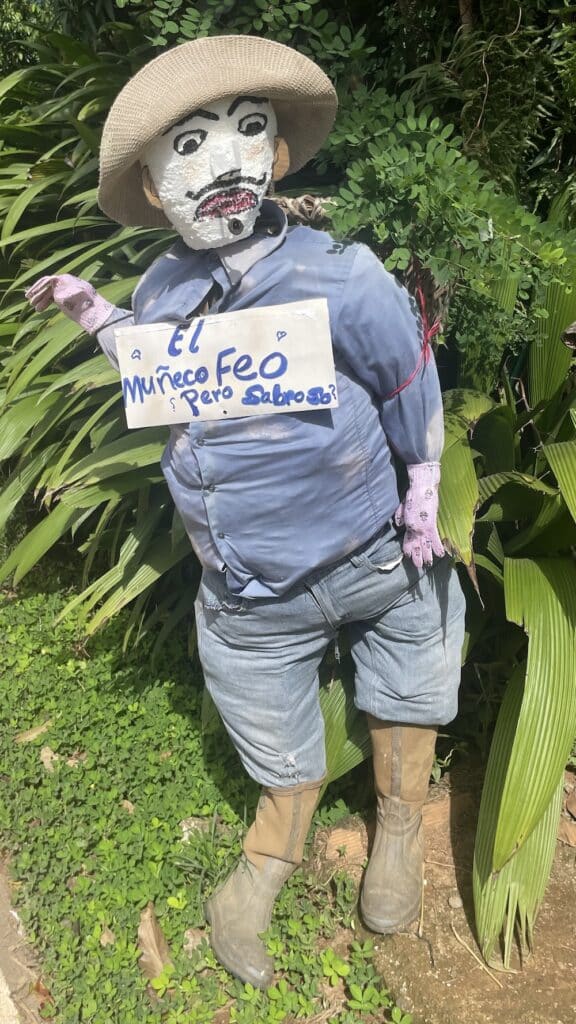
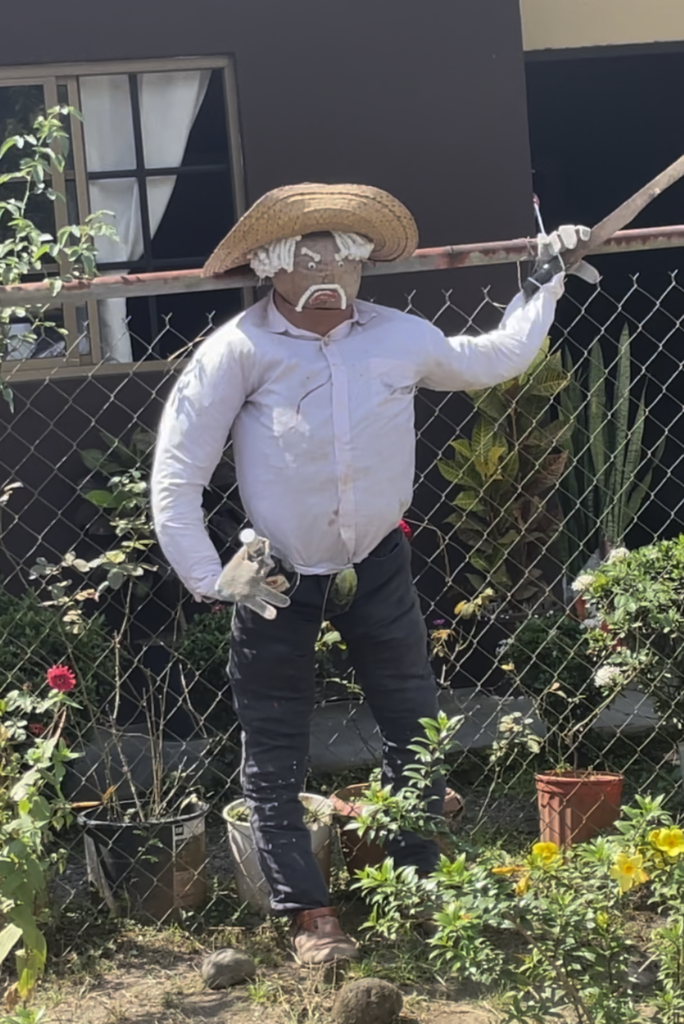
They’re mostly a satire of the people of Los Santos, so you can see builders, fishermen, and farmers. Almost everyone has their “pachita,” which means a bottle of liquor. Others have machetes, fishing rods, coolers, hats, etc.
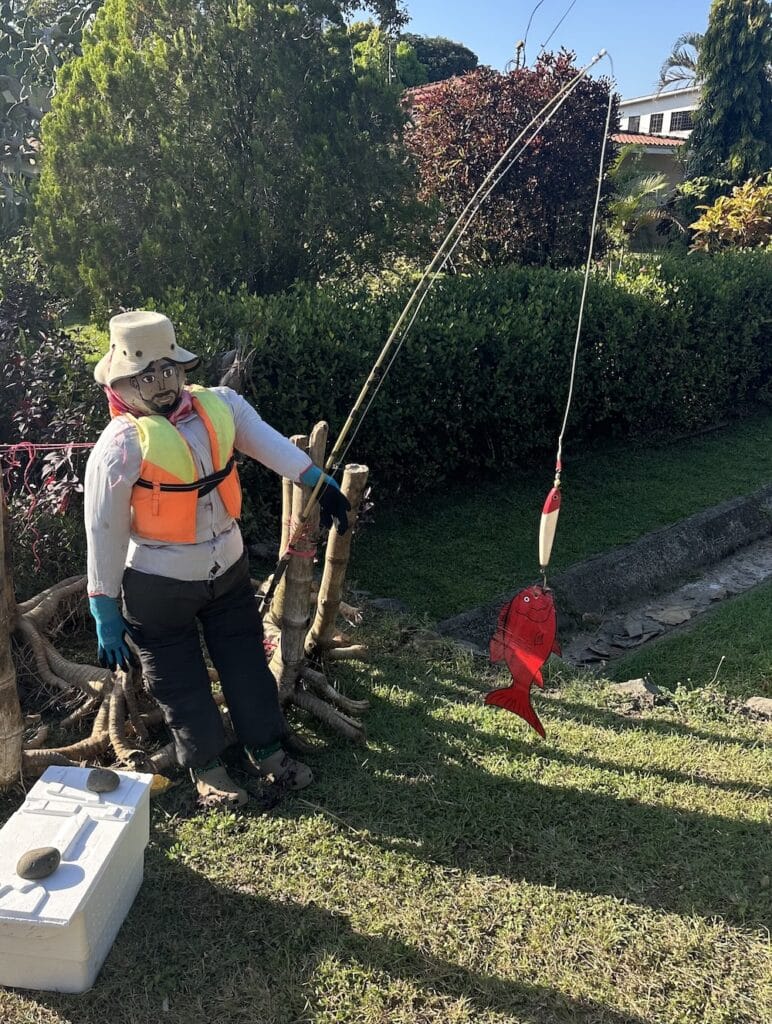
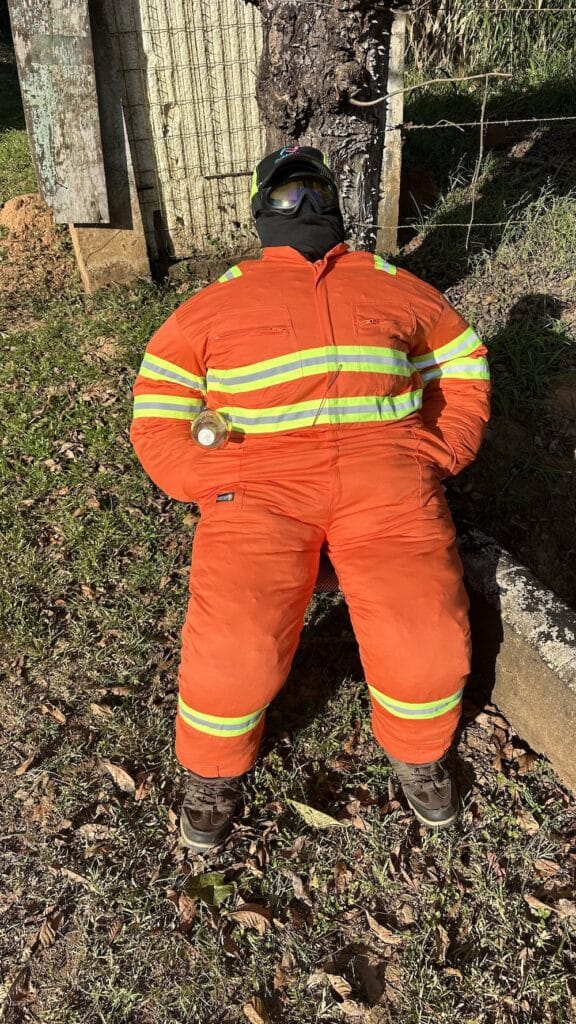
These dolls are stuffed with straw, sawdust, or wood shavings. They are made with old clothes, cardboard, papier-mâché, newspaper, paint, wood, and accessories. Traditional ones are about the size of a scarecrow. Some people celebrate this tradition with mini dolls that are sold in kits and can be personalized.
Where does this tradition come from?
Panama is not the only country in the region that burns an effigy representing the old year or New Year’s Eve. Most Latin American countries celebrate this custom. In South America, it can be seen in Argentina, Peru, Venezuela, Colombia, and Ecuador. Honduras, Nicaragua, and Mexico are some of the northern countries that celebrate the burning of effigies representing the old year.
This burning takes place before midnight on December 31st or in the early hours of January 1st. Like so many other things we celebrate without realizing it, this burning has pagan origins. In ancient Greece, a wooden effigy of the king was symbolically burned to expel the spirits of the old year. Historians point out that this celebration has European influences. The burning of Judas during Holy Week destroys figures to symbolize the punishment of evil and the closing of a cycle. We most likely inherited this custom when the Americas were colonized by the Spanish.
Fire represents purification and rebirth. Burning this effigy leaves behind the sorrows, frustrations, and negative energies of the previous year. It is a definitive closure and a welcome to a new beginning. It is also a form of permissible social critique that creates a collective catharsis.
In Panama, the burning of the effigies of the old year is a symbolic representation of burning away all the negativity of the previous year, which is consumed by the fire.

Leave a Reply
You must be logged in to post a comment.